
Beyond the bedroom
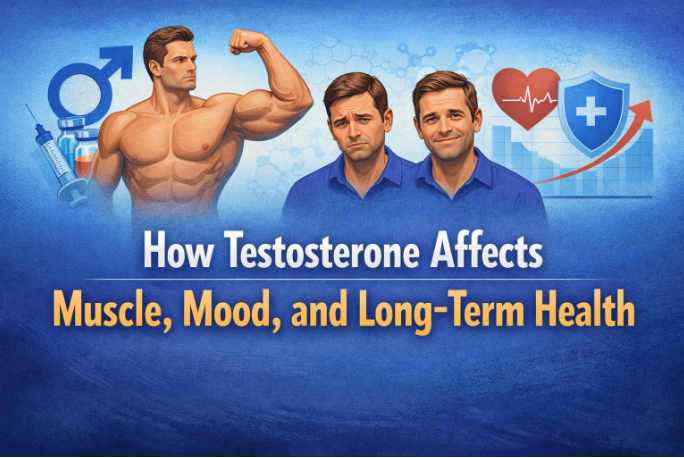
Testosterone helps build and maintain muscle mass, supports red blood cell production, preserves bone density and influences overall sense of well‑being. When levels decline, men may notice weaker muscles, fatigue, low mood and bone loss.
Muscle and metabolism
Muscle is metabolically active tissue. As testosterone drops, you may lose muscle mass and gain fat. Testosterone deficiency contributes to metabolic disorders such as obesity and metabolic syndrome. Decreased muscle mass slows your metabolism, making weight gain more likely. Restoring testosterone can support muscle growth and improve body composition.
Mood and cognition
Low testosterone can affect mood and mental clarity. Symptoms include depressed mood, irritability and difficulty concentrating. Testosterone receptors in the brain influence cognition, and low levels may contribute to fatigue and memory problems.
Long‑term health
Testosterone helps maintain bone density and red blood cell levels. Chronic deficiency can lead to osteoporosis and anemia. It’s also associated with increased risk of metabolic syndrome and type 2 diabetes. Addressing low testosterone can therefore benefit your long‑term health beyond immediate symptoms.
Case example: Andre’s improvement
Andre, 52, noticed he was losing strength and feeling down. Tests showed low testosterone, vitamin D deficiency and mild anemia. With lifestyle changes, resistance training, vitamin D supplementation and monitored testosterone therapy, he regained muscle mass, improved his mood and normalized his red blood cell levels.
Conventional vs functional perspective
Conventional medicine often treats low testosterone with standardized doses and focuses on sexual symptoms. Functional medicine looks at muscle, mood and metabolic health together. Practitioners evaluate diet, stress, inflammation and bone health. If therapy is needed, they tailor dosages and forms in collaboration with testosterone replacement therapy programs to maximize benefits and minimize side effects.
Summary
Testosterone influences much more than sex drive. It affects muscle, mood and long‑term health. Recognizing its wider role helps you take proactive steps to maintain your vitality.