As parents grow older, simple movements such as standing up, walking to the bathroom, or climbing a few steps can become challenging. Reduced muscle strength, balance issues, joint stiffness, and medical conditions increase the risk of falls. Even a minor fall can lead to serious injuries in elderly individuals.
Understanding how to assist safely not only prevents accidents but also preserves dignity and independence.
Understanding Why Falls Happen
Falls often occur due to:
• Weak leg muscles
• Poor balance
• Slippery floors
• Poor lighting
• Side effects of medications
• Sudden drops in blood pressure
Identifying these risk factors is the first step in prevention.
Creating a Safer Home Environment
Small changes at home can significantly reduce fall risks:
• Remove loose rugs and clutter
• Install grab bars in bathrooms
• Ensure proper lighting, especially at night
• Use non-slip mats in wet areas
• Keep frequently used items within easy reach
A safe environment provides confidence and reduces unnecessary strain.
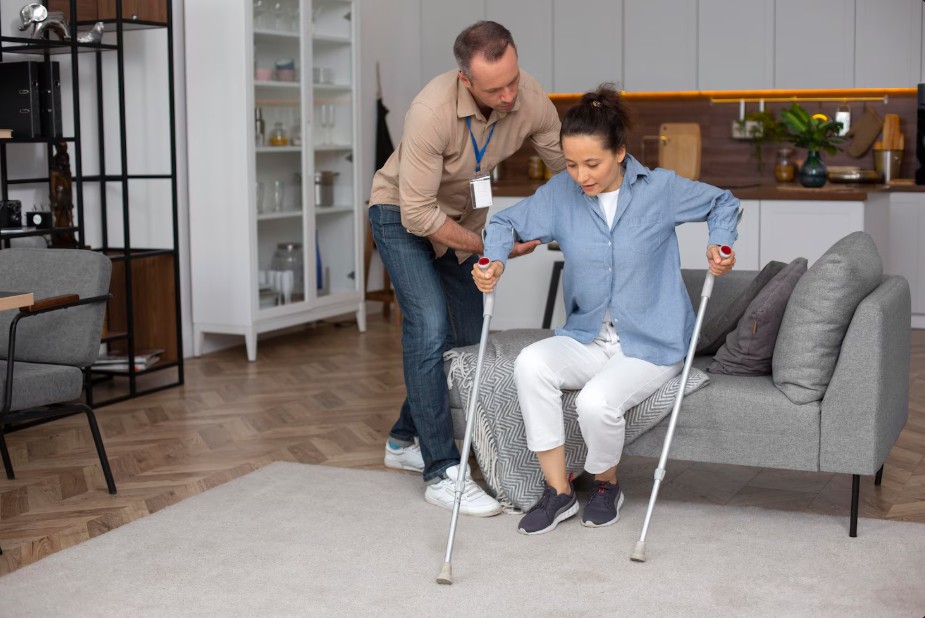
Assisting with Standing and Sitting
When helping an elderly parent stand up:
• Encourage them to move slowly
• Let them place both feet firmly on the ground
• Support them from the side, not by pulling their arms
• Use stable furniture for support
When sitting down, ensure the chair is steady and has armrests. Avoid sudden movements or rushing.
If mobility becomes consistently difficult, structured elderly care can provide supervised daily assistance.
Supporting Safe Walking
While walking:
• Stay beside them rather than in front
• Allow them to hold your arm for balance
• Encourage small, steady steps
• Avoid slippery footwear
For individuals recovering from illness or weakness, guided physio sessions can help rebuild strength and improve balance over time.
Encouraging Strength and Balance
Light daily exercises can improve muscle strength and coordination. Simple movements such as ankle rotations, seated leg lifts, or short supervised walks can make a noticeable difference.
Before starting any exercise routine, it is advisable to ensure overall health stability. Regular medical checkups help monitor conditions that may affect mobility, such as blood pressure fluctuations or joint disorders.
Watching for Warning Signs
Certain symptoms may indicate a higher fall risk:
• Frequent dizziness
• Sudden weakness
• Unsteady gait
• Vision problems
• Confusion
If these signs appear, timely medical evaluation is important to prevent injuries.
Preserving Dignity While Providing Support
Helping an elderly parent move safely requires patience and respect. Encourage independence whenever possible. Offer support without making them feel dependent. Clear communication and reassurance can build confidence and reduce fear of falling.
With proper precautions, environmental adjustments, and consistent monitoring, families can significantly lower the risk of falls and ensure safer mobility at home.